Introduction
Transforming a single room into two functional zones doesn’t require a renovation. When space is limited, strategic furniture placement can create distinct areas that feel like separate rooms. This article shows how one designer turned a compact 1920s apartment into a dual-purpose living and art studio using only existing pieces.
What Happened
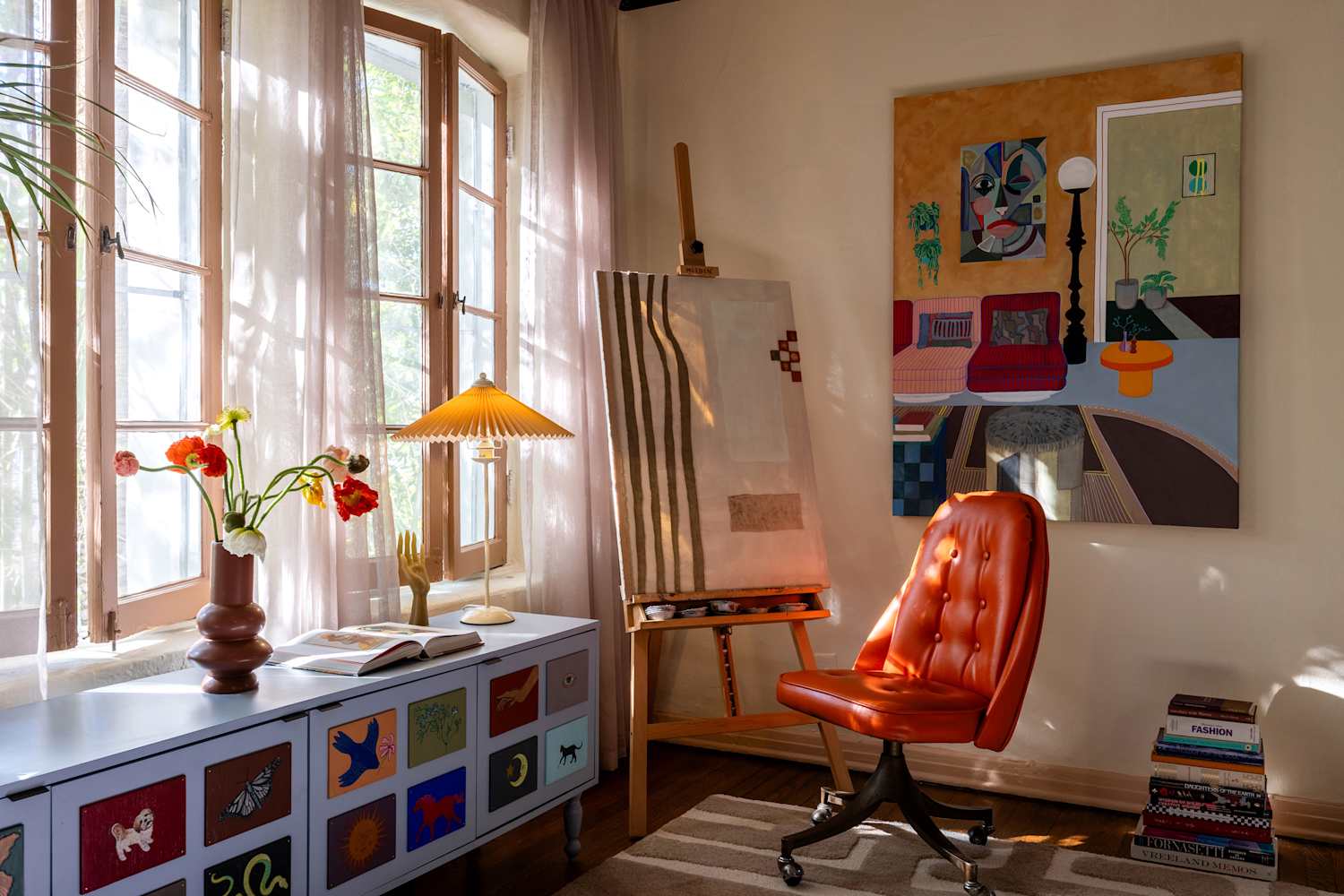
Jude Morgan, an artist and designer, prioritized fitting her oversized sofa into her small New York rental. Needing a dedicated space to create art, she experimented with back-to-back seating. By positioning the sofa with its back facing one direction and adding orange accent chairs to the rear, she inadvertently split the room into two separate areas—one for relaxation, another for creativity.
Why This Matters
Many apartment dwellers struggle with awkward layouts that don’t fit traditional furniture arrangements. This approach proves that you don’t need to buy new items to achieve a dual-function room. Rearranging existing pieces and layering rugs can define zones, improve flow, and make a small space feel intentionally designed rather than cramped.
Key Takeaways
- Back-to-back sofa placement can naturally separate a living area from a workspace or art corner.
- Area rugs anchor each zone; Jude used a Walker Noble Kuba Wool rug from West Elm to define her art space.
- Personal touches—like mother’s pillows and father’s vinyl records—add warmth and meaning without extra cost.
- Orange accent chairs tied the two areas together while signaling a transition between spaces.
- No new furniture needed—the redesign relied on existing pieces, proving that clever placement beats constant shopping.
Conclusion
Jude’s experiment shows that a simple furniture shift can double the functionality of a single room. By thinking beyond conventional layouts and using what you already own, anyone can create a more intentional, organized, and inspiring home environment.



Discussion
Join the conversation
Thoughtful reactions, questions, and follow-up ideas help shape the next story.