Introduction
Artificial intelligence is rapidly changing how software is built, tested, and deployed. Enterprises adopting AI-native pipelines must rethink traditional development practices to avoid hidden risks and escalating costs.
What Happened
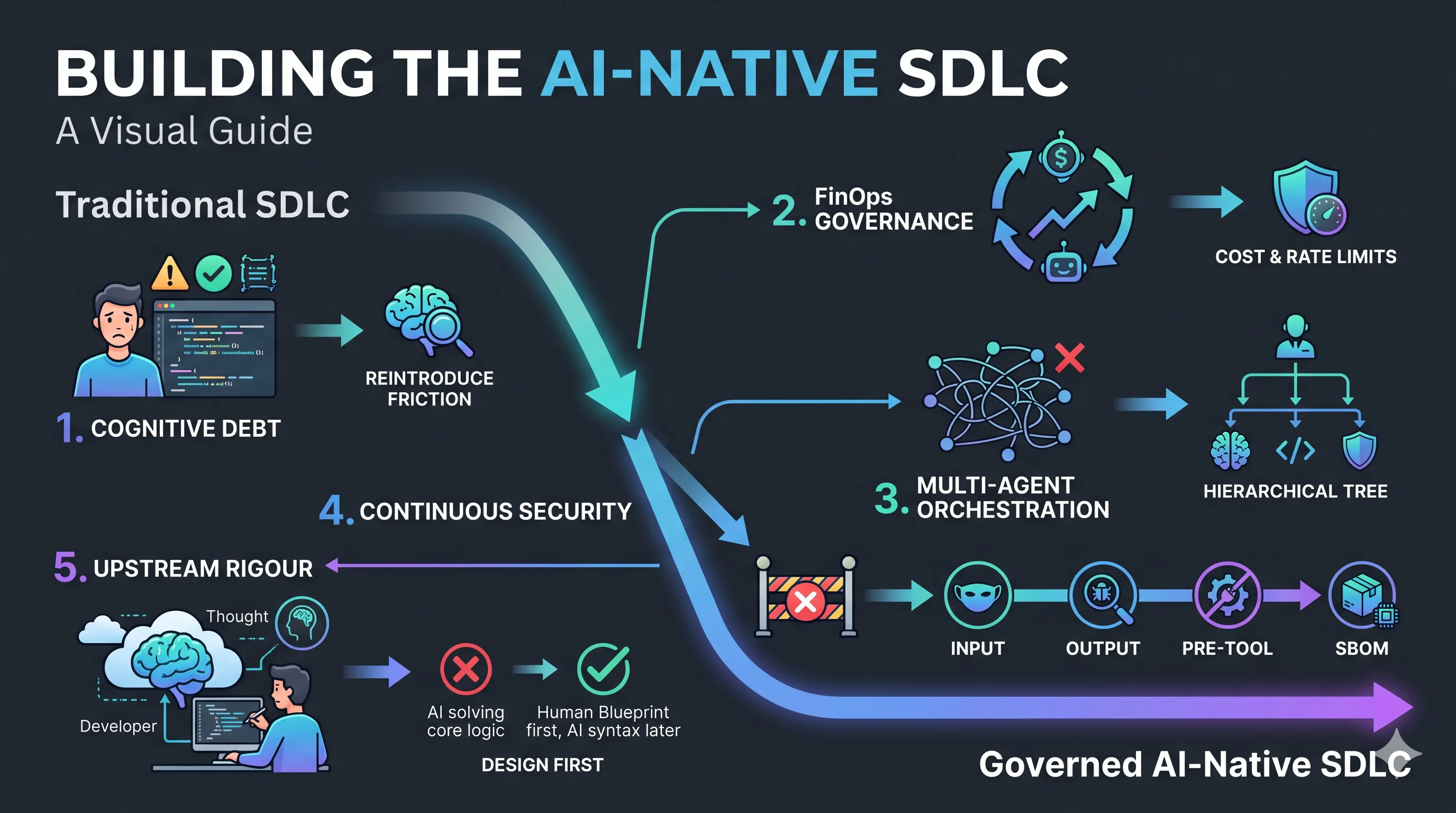
AI code generators can produce boilerplate in seconds, but the real challenge lies in tracing logic and maintaining comprehension. Teams adopting AI without strict review processes risk accumulating cognitive debt that slows down future debugging and architecture changes.
The article outlines five critical lessons for modern DevSecFinOps teams. These cover everything from agent orchestration strategies to finite operations and live security hooks.
Why This Matters
Unchecked AI consumption can balloon cloud bills through unpredictable token usage. Without live guardrails, autonomous agents may introduce vulnerabilities or hallucinated code into production. Understanding these risks helps teams build safer, more cost-effective AI-integrated workflows.
Key Takeaways
- Prioritize deep comprehension over code volume when reviewing AI-generated outputs.
- Integrate FinOps directly into development platforms to track and limit token budgets.
- Choose hierarchical agent topologies to balance central control with distributed efficiency.
- Replace rigid phase gates with live input and output hooks for real-time security enforcement.
- Shift engineering rigor upstream by investing in system design and architectural constraints.
Conclusion
AI-induced returns are only realized when teams enforce strict governance, maintain epistemic vigilance, and redesign workflows around intelligent automation. The future of software delivery belongs to those who treat AI as a tool under human guidance, not a replacement for sound engineering practice.





Discussion
Join the conversation
Thoughtful reactions, questions, and follow-up ideas help shape the next story.