Introduction
American workers are taking home the smallest share of national income since the Bureau of Labor Statistics began tracking the metric in 1947. At just 52.8%, the labor share has fallen even as corporate profits and stock valuations have climbed to historic levels. The result is a growing divide between record company earnings and the financial reality of the people who produce them.
What Happened
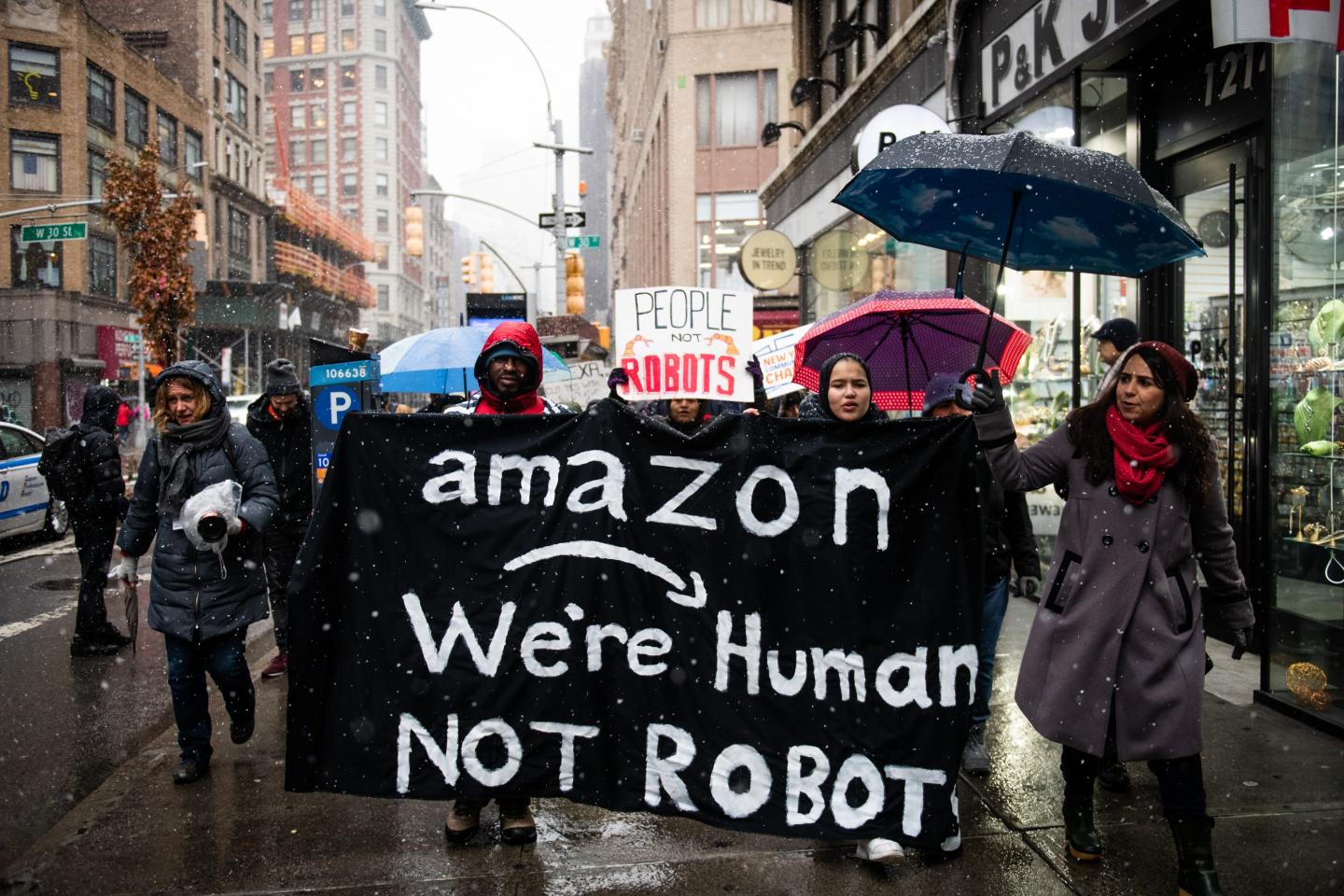
A Government Accountability Office review across 11 states found that Amazon had 12,346 workers enrolled in the Supplemental Nutrition Assistance Program and 11,338 relying on Medicaid. Those numbers are nearly triple the levels recorded in 2020. During that same period, Amazon's annual profits rose from $11.6 billion to $77.7 billion, and its 2025 revenue reached a record $717 billion.
Amazon disputed the framing. A company spokesperson called the conclusion misleading and said raw enrollment figures do not reflect percentages. The spokesperson noted that Amazon offers industry-competitive pay, day-one health coverage for full-time employees at $5 per week, and that 74% of regular full-time staff are enrolled in company health plans—above the 65% private-sector average. Walmart, FedEx, and several ride-share and delivery companies also reported increases in workers using federal assistance.
Why This Matters
The shift is part of a decades-long economic trend. Since 1982, corporate profits as a share of U.S. GDP have grown from 8% to 15.85%, while employee compensation has fallen from 66.6% to 61.9%. Because SNAP eligibility begins at roughly 130% of the poverty line, many people receiving aid are already working full-time yet still cannot cover basic expenses.
Economists cite multiple causes. Union representation has dropped from 20.1% of workers in 1983 to 10.0% in 2025. Companies have also increasingly relied on subcontractors and gig workers for roles once handled by direct employees, reducing benefit obligations and legal liability. Some researchers point to artificial intelligence, noting that occupations with high AI exposure have experienced slower real wage growth even without widespread job losses.
Key Takeaways
- U.S. labor share fell to 52.8%, the lowest level since 1947.
- Amazon's SNAP and Medicaid enrollment among workers nearly tripled since 2020.
- Amazon profits grew from $11.6 billion to $77.7 billion over the same period.
- Corporate profits as a share of GDP have nearly doubled since 1982.
- Union membership and direct employment relationships have declined significantly.
- AI adoption may be contributing to wage compression in exposed occupations.
Conclusion
It remains unclear whether the shrinking labor share is a temporary cycle or a permanent structural change. Some economists argue that stable inflation and a tight labor market could eventually restore wage growth. Others warn that if pay stays flat even as the economy improves, the decline may represent a deeper, long-term shift. For now, the data shows that record corporate revenue does not automatically mean greater financial security for workers.
Discussion
Join the conversation
Thoughtful reactions, questions, and follow-up ideas help shape the next story.