Introduction
The laptop market in 2026 is obsessed with thinness, and few devices embody that trend better than the Asus ProArt P16. Part of the new Nvidia RTX Spark family, this 16-inch creative workstation pairs a striking tandem OLED panel with an ultrathin aluminum chassis. Asus positions it squarely at designers, video editors, and digital artists who want portability without sacrificing screen quality. But with configurations starting at $4,500 and topping out near $7,000, the ProArt P16 asks buyers to pay a serious premium. Does it deliver enough to justify the cost, or does Apple still own the creative laptop space?
What Happened
Asus recently launched the ProArt P16 as one of the first RTX Spark PCs, a category built around Nvidia's N1X chip and Blackwell graphics architecture. The review unit tested here carries a 20-core CPU, a 6,144-core GPU, and 64GB of unified memory, with no option to drop below that memory tier. A base model with a lower-resolution screen and 512GB of storage lists for $2,800, while the fully loaded version with 128GB of memory and 2TB of storage reaches $7,000.
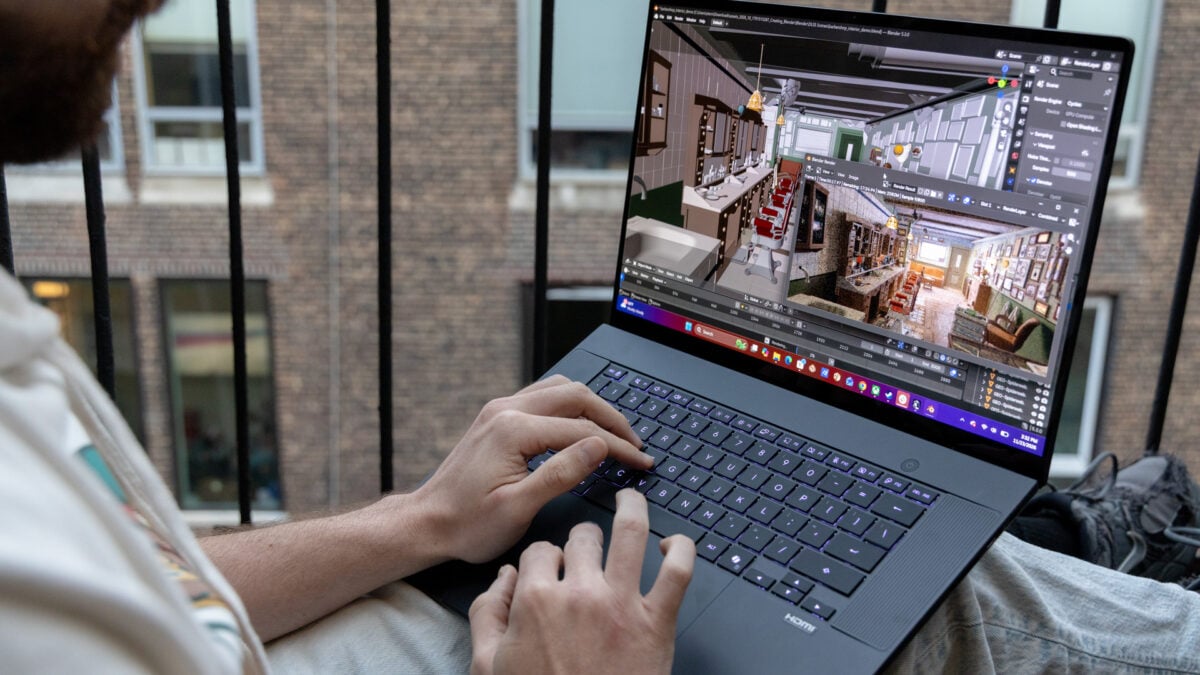
Physically, the machine measures roughly 13mm thick and weighs just under four pounds, making it thinner than the latest 16-inch MacBook Pro and lighter than competitors like the Razer Blade 16. The chassis is aluminum unibody with minimal keyboard flex, and the lid opens easily thanks to perforated edges.
The centerpiece is a 16-inch Lumina Pro tandem OLED display with 100% DCI-P3 color coverage, a 120Hz refresh rate, variable refresh rate support, and touch input. It peaks at 1,600 nits in HDR and around 500 nits in standard use. Resolution is 3,840 by 2,400, slightly higher than Apple's 16-inch panel, though its 1,000,000:1 contrast ratio trails Apple's PROLED XDR display.
Port selection includes three USB 4 Type-C ports at 40Gbps, one USB-A port, an SD card reader, HDMI, and a headphone jack. Notably, no RTX Spark laptop includes Thunderbolt 5. Power and performance are managed through the MyAsus app, which offers modes such as Whisper and Standard, along with GPU memory allocation settings. The 99.9Wh battery is large, but real-world endurance depends heavily on which power mode is active.
Why This Matters
The ProArt P16 arrives at a moment when creative professionals are weighing Windows on ARM against Apple's established silicon ecosystem. Nvidia is marketing RTX Spark machines as efficient, AI-capable workstations that can run local models and accelerate creative apps, yet the price tags place them directly against MacBook Pro configurations that many reviewers still consider faster and better calibrated for color-critical work.
For PC-only creators, the ProArt P16 offers one of the most polished designs in the RTX Spark lineup. However, its value proposition weakens when benchmarked against x86 laptops with discrete GPUs that cost significantly less. The machine also asks users to tolerate quirks like ARM emulation for many games, a haptic trackpad with inconsistent palm rejection, and pre-installed AI software that may feel intrusive to some artists. Understanding these trade-offs is essential before spending several thousand dollars on a thin creative laptop.
Key Takeaways
- Stunning display: The 16-inch tandem OLED screen is bright, color-accurate, and supports 120Hz refresh with VRR, though Apple's PROLED XDR still offers deeper contrast.
- Premium build: At about 13mm thick and under four pounds, the aluminum unibody chassis is exceptionally portable and rigid.
- High starting price: The configuration most creators will want begins at $4,500, with maxed-out units reaching $7,000.
- Solid but not class-leading performance: The N1X chip edges out some ARM rivals in CPU and graphics tests, but it trails Apple's M5 Max and dedicated gaming GPUs in several workloads.
- Battery life is mode-dependent: The 99.9Wh cell can last a full workday in Whisper mode, but demanding tasks drain it much faster.
- Software quirks: The MyAsus app is necessary for optimal power management, and pre-installed AI tools like MuseTree and Hermes Agent may not appeal to every user.
Conclusion
The Asus ProArt P16 is a beautiful, well-engineered creative laptop that represents the current peak of thin RTX Spark design. Its screen is gorgeous, its chassis feels expensive, and it handles creative workloads competently. Yet the starting price of $4,500—and the lack of a cheaper memory configuration—makes it a difficult recommendation when Apple's MacBook Pro with PROLED XDR offers superior display contrast and faster silicon for a similar or only slightly higher investment.
If you are committed to the Windows on ARM ecosystem, have the budget for a top-tier workstation, and prioritize portability and screen quality above all else, the ProArt P16 is among the best RTX Spark options available today. For everyone else, especially those who need maximum rendering speed or gaming performance per dollar, less expensive x86 alternatives or a MacBook Pro remain the smarter choices. As impressive as this machine is, it remains a luxury product for a very specific kind of buyer.
Discussion
Join the conversation
Thoughtful reactions, questions, and follow-up ideas help shape the next story.