Introduction
A measure designed to overhaul federal infrastructure permitting has unexpectedly become a flashpoint for Democratic infighting. The Bipartisan American Affordability and Jobs Act cleared the Senate late Thursday, but the vote exposed sharp disagreements over how aggressively to pursue energy development, how much weight to give tribal sovereignty, and whether artificial intelligence data centers should cover their own grid-connection costs.
What Happened
The Senate approved the legislation by a 62-33 margin. Two Republicans voted against it, and a substantial number of Democratic-aligned senators also opposed the measure. While 15 Democrats supported the bill, roughly two-thirds of the party's caucus voted no or declined to back it.
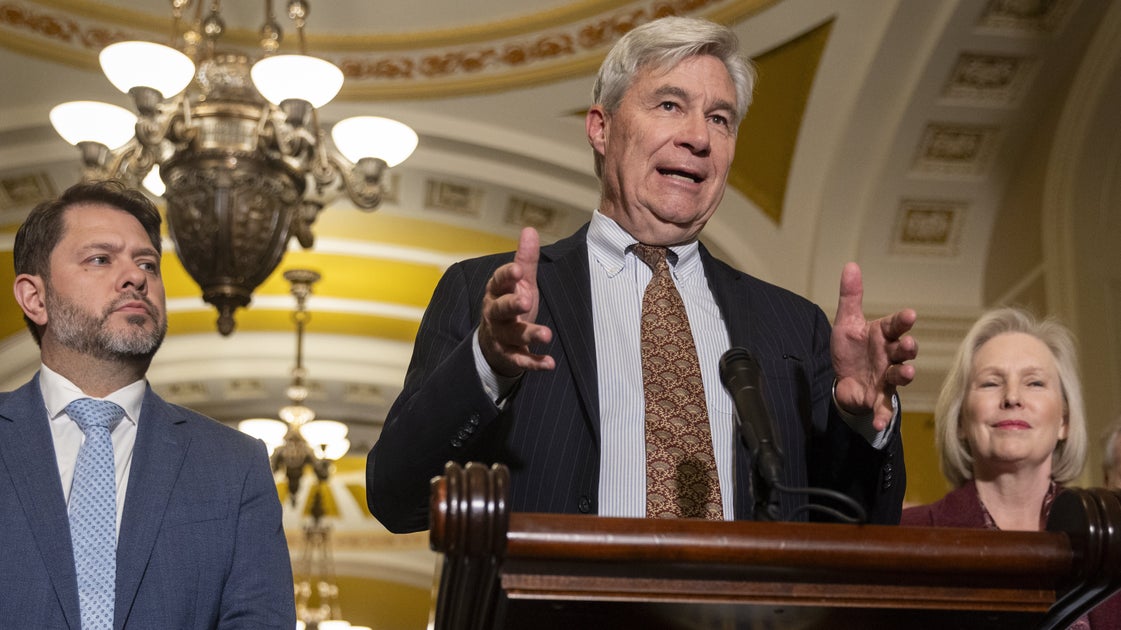
The legislation aims to accelerate construction of wind farms, transmission lines, mass transit projects, and data centers by changing federal approval rules. Its lead Democratic sponsors, Sens. Sheldon Whitehouse of Rhode Island and Martin Heinrich of New Mexico, reject the idea that the bill is a handout to the tech industry. Whitehouse dismissed that characterization as "bullshit," arguing instead that it forces data center developers to pay the full cost of required infrastructure upgrades rather than shifting those expenses to utility ratepayers.
Opponents, led by Sens. Jeff Merkley and Ron Wyden of Oregon, say the bill is out of step with the recent election and weakens long-standing environmental and tribal protections. Wyden had sought to ban data centers from federal lands, but his proposal was not included in the amendment process. Merkley and Wyden also blocked consideration of amendments, preventing a tribal-protection measure from advancing. Sen. Ruben Gallego of Arizona criticized that maneuver on social media, calling it an attempt to sabotage the bill.
Why This Matters
The dispute reveals a fracture within the Democratic coalition between lawmakers who want to remove barriers to construction and environmental and tribal advocates who fear deregulation will damage sacred sites and public lands. It also sets up a potential showdown in the House, where Rep. Jared Huffman of California has already signaled opposition to the bill's tribal provisions, and where progressives such as Rep. Alexandria Ocasio-Cortez argue Democrats should wait until they control both chambers to negotiate a stronger version.
The legislation also touches on a rapidly growing economic issue: the projected $10 trillion AI data center buildout over the next eight years. Sen. Ed Markey of Massachusetts warned that the bill could smooth the path for data center expansion across the country, raising concerns about water use, noise, and light pollution.
Key Takeaways
- The Senate passed the Bipartisan American Affordability and Jobs Act by a 62-33 vote, with substantial Democratic opposition.
- The bill would speed up federal approvals for power lines, clean energy, transit, and data centers while making it harder for environmental and tribal groups to block projects through litigation.
- It requires data center developers to pay for the infrastructure upgrades their facilities require instead of passing costs to ratepayers.
- Tribal organizations and several Senate Democrats say the measure weakens historic preservation laws and threatens sacred sites.
- Sens. Merkley and Wyden blocked amendments, including one addressing tribal concerns, drawing criticism from colleagues such as Sen. Gallego.
- The bill now moves to the House, where its future remains uncertain amid opposition from progressives and tribal advocates.
Conclusion
For now, the permitting bill is headed to the House, but its path forward is far from guaranteed. The Senate vote made clear that Democrats are not unified on how to balance rapid infrastructure development with environmental stewardship and tribal rights. Whether the House will adopt the Senate version, rewrite it, or let it stall remains to be seen, but the intra-party battle over this legislation is unlikely to fade quickly.
Discussion
Join the conversation
Thoughtful reactions, questions, and follow-up ideas help shape the next story.