Introduction
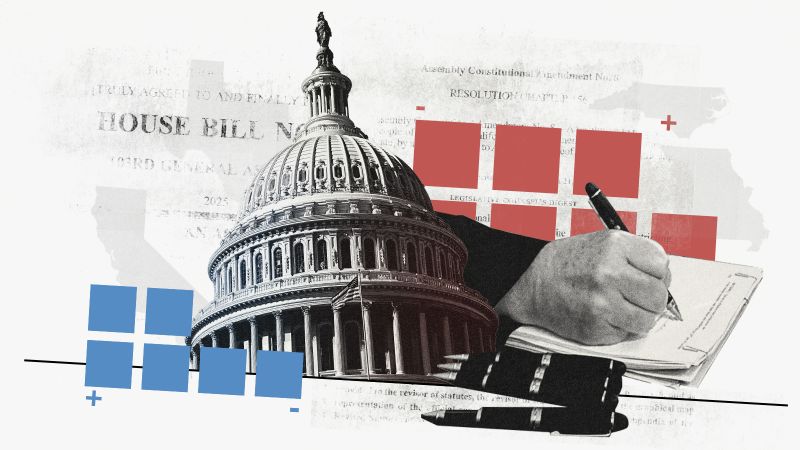
The redistricting cycle has taken center stage as states redraw congressional boundaries ahead of the 2024 midterms, with the potential to influence which party controls the House. As political actors maneuver to shape district lines, the outcomes reflect broader shifts in electoral strategy following the latest census.
What Happened
Republicans have secured advantages in multiple states through freshly drawn congressional maps, positioning themselves favorably for the upcoming midterm contests. However, the national map remains in flux, especially in Missouri, where competing court rulings have created uncertainty around the state's electoral lines. The U.S. Supreme Court recently declined to block a Missouri Supreme Court decision that halted a Republican-drawn map likely to flip a Democratic seat. Shortly after, a federal judge issued a separate directive ordering the state to adopt the GOP-favoring version, extending the legal dispute. Similar turbulence surfaced in Virginia, where the state's highest court blocked a voter-approved Democratic-friendly plan. These developments occur against the backdrop of the Supreme Court's earlier decision to weaken a key component of the Voting Rights Act, which prompted new maps across several Republican-led states.
Why This Matters
With the House narrowly divided, each redistricting decision carries outsized weight in determining partisan control. The current wave of map adjustments bolsters Republicans as they defend their slim majority, while complicating Democratic efforts to regain ground. Redistricting typically follows the decennial census, but mid-decade changes have become increasingly common, used as a strategic lever to influence congressional results. Voters in Maryland will decide a ballot measure this November that could expand Democratic map-making power, and several other states may see new district lines before 2028. Beyond individual races, these shifts shape the broader trajectory of federal legislation.
Key Takeaways
- Republicans hold a strategic edge in the national redistricting battle heading into the 2024 midterms.
- Legal turmoil in Missouri, featuring conflicting rulings from the U.S. Supreme Court and a federal judge, underscores the volatility of the process.
- The Supreme Court's partial Voting Rights Act rollback has accelerated map changes in Republican-led states.
- Virginia's top court blocked a voter-approved Democratic map, highlighting the partisan stakes.
- Mid-decade redistricting is becoming a regular political tool, with more states adjusting lines between censuses.
- Maryland voters will weigh a November measure that could grant Democrats greater freedom to redraw districts.
- The narrowly divided House makes every redistricting decision potentially decisive for control.
Conclusion
As the 2024 midterms approach, the fight over congressional maps remains a central theater of political strategy. Republicans have seized the early advantage, but ongoing litigation and voter-driven initiatives mean the landscape could shift again before November. For voters and strategists alike, staying informed about redistricting developments is essential to understanding which party holds the upper hand in the battle for the House.



Discussion
Join the conversation
Thoughtful reactions, questions, and follow-up ideas help shape the next story.