Introduction
The Pentagon’s experiment with artificial intelligence on the battlefield began years before most of the public knew about it. Project Maven, the U.S. military’s algorithmic warfare initiative, brought computer vision and machine learning to targeting operations in Iraq, Syria, and Somalia. New reporting and casualty data suggest that rather than reducing harm, the rollout of these tools coincided with a sharp increase in strikes and civilian deaths.
What Happened
Project Maven was designed to fuse drone footage, satellite imagery, radar data, and other intelligence into a single targeting picture. Google initially helped build the technology but withdrew in 2018 after employee protests; Palantir later took over and created the Maven Smart System. The tools were first deployed to Somalia and the Middle East in late 2017.
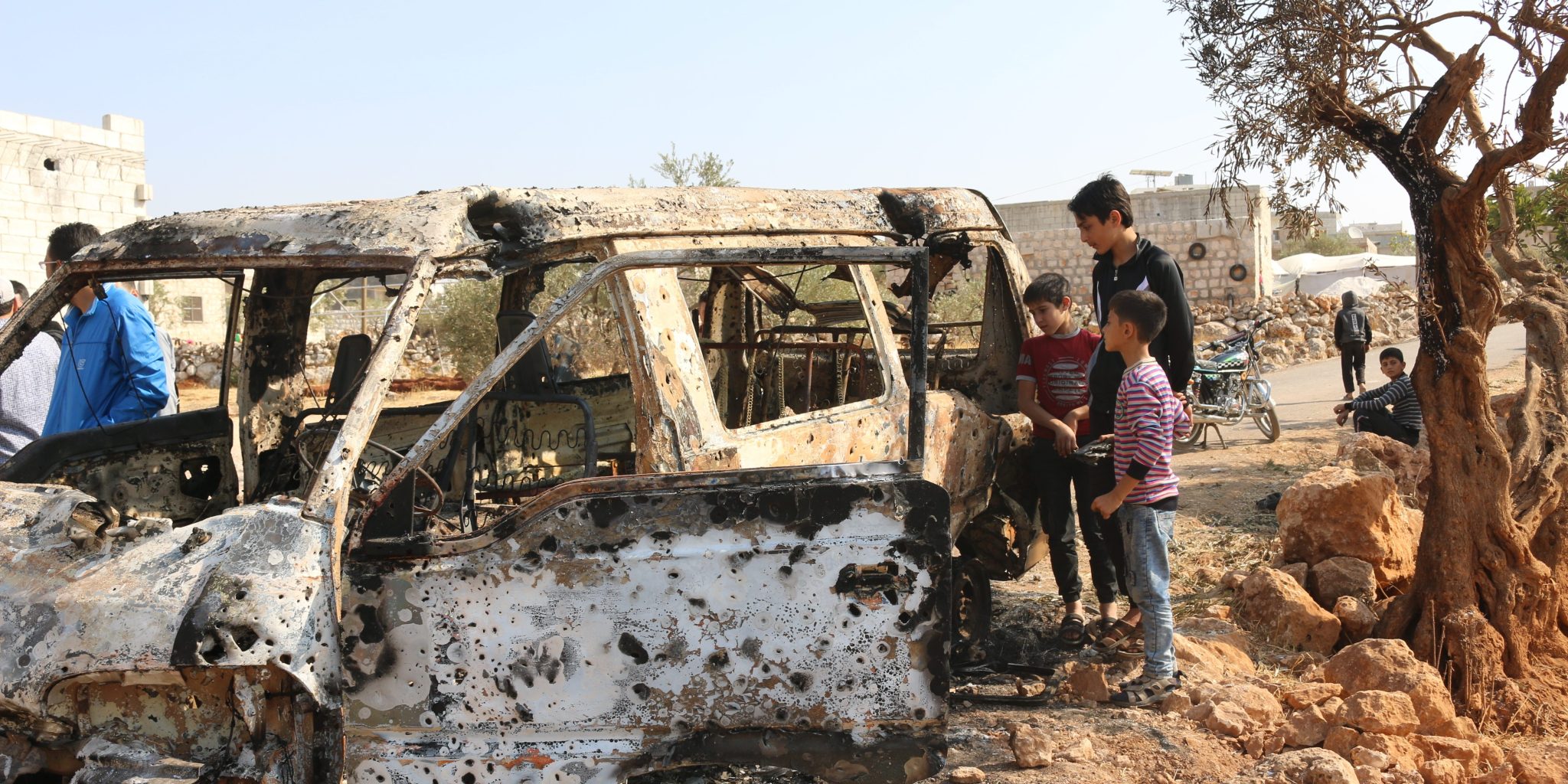
The human cost became visible in October 2019, during the U.S. special forces raid that killed Islamic State leader Abu Bakr al-Baghdadi in Barisha, Syria. As a vehicle carrying three agricultural workers passed nearby, Maven’s AI flagged it as a potential target. A strike followed. One man lost an arm; two others died. The U.S. military rejected the survivors’ claims of wrongdoing.
Airwars, a civilian harm monitoring group, tracked U.S. strikes in Somalia before and after Maven arrived. In the two years before December 2017, there were 64 attributed strikes and at least 25 civilians killed. In the two years after, strikes jumped to 153, and the minimum civilian death toll rose to 79. The share of strikes resulting in civilian casualties grew from roughly one in seven to more than one in five.
Why This Matters
The timing overlaps with other policy changes, including a broader designation of hostilities in Somalia and looser approval rules for strikes. Still, the trend aligns with Maven’s stated purpose: find more targets and speed up the targeting cycle. Internal accounts suggest early versions of the software were frequently wrong, with detection accuracy sometimes falling below 30 percent and occasionally under 10 percent.
The implications extend beyond Somalia. A 2024 military exercise reportedly required operators to make roughly 1,000 targeting decisions in an hour—about one every 72 seconds. Critics argue that at that pace, human oversight becomes symbolic rather than meaningful. Meanwhile, the National Geospatial-Intelligence Agency is moving toward “anomaly detection” models that flag unusual behavior, not just known threats, potentially expanding the role of AI in deciding who or what gets targeted.
Key Takeaways
- Project Maven introduced AI-powered computer vision to U.S. military targeting in Iraq, Syria, and Somalia starting in late 2017.
- Airwars data shows U.S. strikes in Somalia more than doubled after Maven’s introduction, with civilian deaths rising from at least 25 to at least 79 over comparable two-year periods.
- The October 2019 strike near Barisha, Syria, during the al-Baghdadi raid illustrates how algorithmic flagging can lead to civilian harm even during high-profile operations.
- Early Maven models demonstrated low accuracy in some conditions, sometimes failing to identify objects correctly more than 70 percent of the time.
- Palantir’s Maven Smart System has been designated a program of record, embedding the technology across the U.S. military.
- Current international negotiations on autonomous weapons do not cover target-identification AI like Maven, leaving a regulatory gap.
Conclusion
The evidence does not prove that AI alone caused every civilian death, but it undermines claims that algorithmic targeting has made warfare more precise or more humane. As the U.S. military expands computer vision into new domains and speeds up decision-making, the question is no longer whether AI belongs on the battlefield, but whether sufficient safeguards exist to protect civilians when the machines get it wrong.
Discussion
Join the conversation
Thoughtful reactions, questions, and follow-up ideas help shape the next story.