Introduction
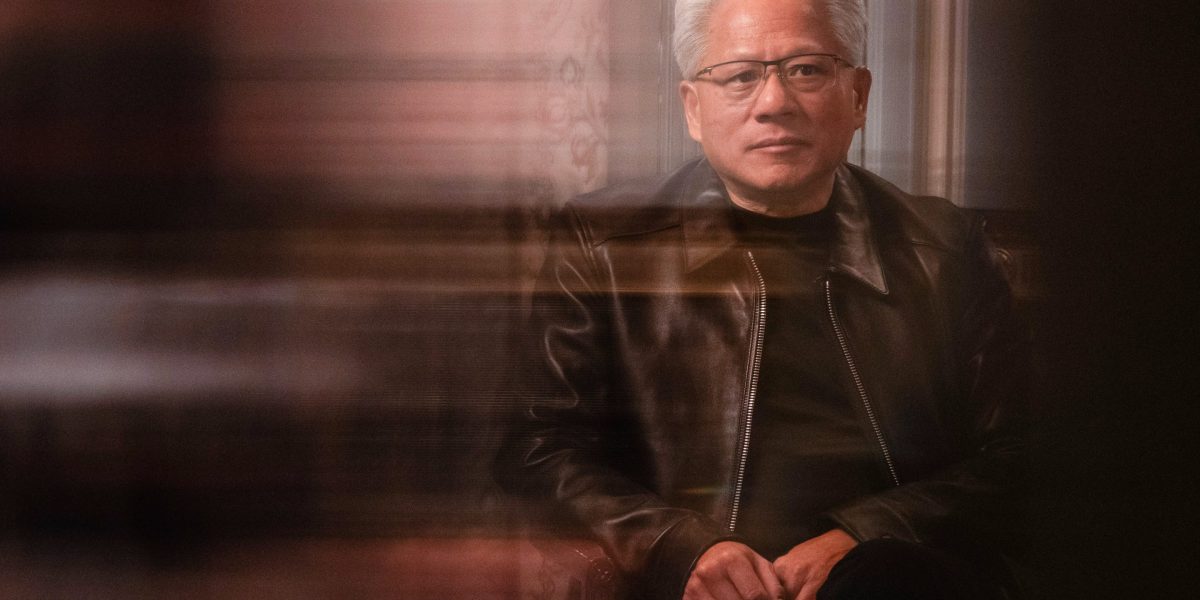
Nvidia, the semiconductor giant at the center of the artificial intelligence boom, is searching for a new leader. The company's board confirmed on its first earnings call since founder Jensen Huang stepped down that it has retained a search firm to identify his replacement. Both internal and external candidates are under consideration. Whoever lands the role will inherit a business with enormous market value, extraordinarily high investor expectations, and a legacy that may be harder to match than any product roadmap.
What Happened
The announcement came during Nvidia's Tuesday earnings call, marking the first public update since Huang's resignation. The board said it will evaluate candidates from inside the company and from outside. Nvidia remains one of the world's most valuable corporations and a driving force behind generative AI, but it also contends with intensifying competition and geopolitical pressures. Huang retains a 3.6 percent stake, and because Nvidia has no supervoting share structure, that represents his full voting power.
Why This Matters
Succession research suggests that replacing a founder-CEO is among the most difficult transitions in business. A 2024 Spencer Stuart analysis found that founder chief executives stayed in the role for an average of 21 years before exiting, far longer than the usual 7.4-year stint for an S&P 500 chief. Many founders do not fully step away: nearly half remained as board chair after leaving the CEO post, compared with about a third of non-founder chiefs. Spencer Stuart also found that roughly one in five executives who replaced founder-CEOs between 2015 and 2022 departed within two years. By contrast, the two-year exit rate for all S&P 1500 CEOs appointed in that era was 16 percent.
Management experts note that the founder often remains the biggest obstacle. Robert Kelley of Carnegie Mellon University's Tepper School of Business said a successor must avoid trying to outshine the departed leader and instead focus on what they can do for the business. Molly Rosen of ProjectNext Leadership added that founders often view the company as their creation, making it hard for anyone else to match their vision.
Nvidia's situation adds another layer. Longtime employees remain devoted to Huang, some of whom became wealthy under his leadership, while others are unhappy about his departure. Three of Huang's relatives—his children Spencer and Madison, and his son-in-law Nico Caprez, who serves as vice president of global AI infrastructure growth—still work at the company.
Key Takeaways
- Nvidia's board has hired a search firm to find Jensen Huang's successor and is weighing both internal and external candidates.
- Replacing a founder-CEO is statistically riskier: about one in five such successors left within two years, according to Spencer Stuart.
- Founders often stay involved after stepping down, with nearly half remaining as board chair, which can limit a successor's freedom to chart a new course.
- Employee loyalty to Huang, including family members still on staff, may complicate the transition for the next chief executive.
- There are success stories, such as Sundar Pichai at Google and Brian Niccol at Chipotle, showing that founder succession can work with patience and the right approach.
Conclusion
Nvidia's next CEO will face more than the usual pressures of leading a major AI company. They will have to manage a workforce that reveres its founder, navigate a board that has ruled out Huang's return despite ongoing calls for him to come back, and operate in a market where expectations are punishingly high. Experts agree that the best path forward is to move slowly, earn trust, and build a distinct leadership style while respecting what Huang created. Whether the next chief can step out of a very large shadow remains to be seen.
Discussion
Join the conversation
Thoughtful reactions, questions, and follow-up ideas help shape the next story.