Introduction
Tardigrades have earned a reputation as near-indestructible microscopic animals, capable of enduring freezing cold, intense radiation, and even the vacuum of space. Yet for all their fame, scientists are still uncovering new species in overlooked corners of the planet. A recent study has added two previously unknown armoured tardigrades to the record, both recovered from deep-sea sediments on an underwater mountain in the Atlantic Ocean.
What Happened
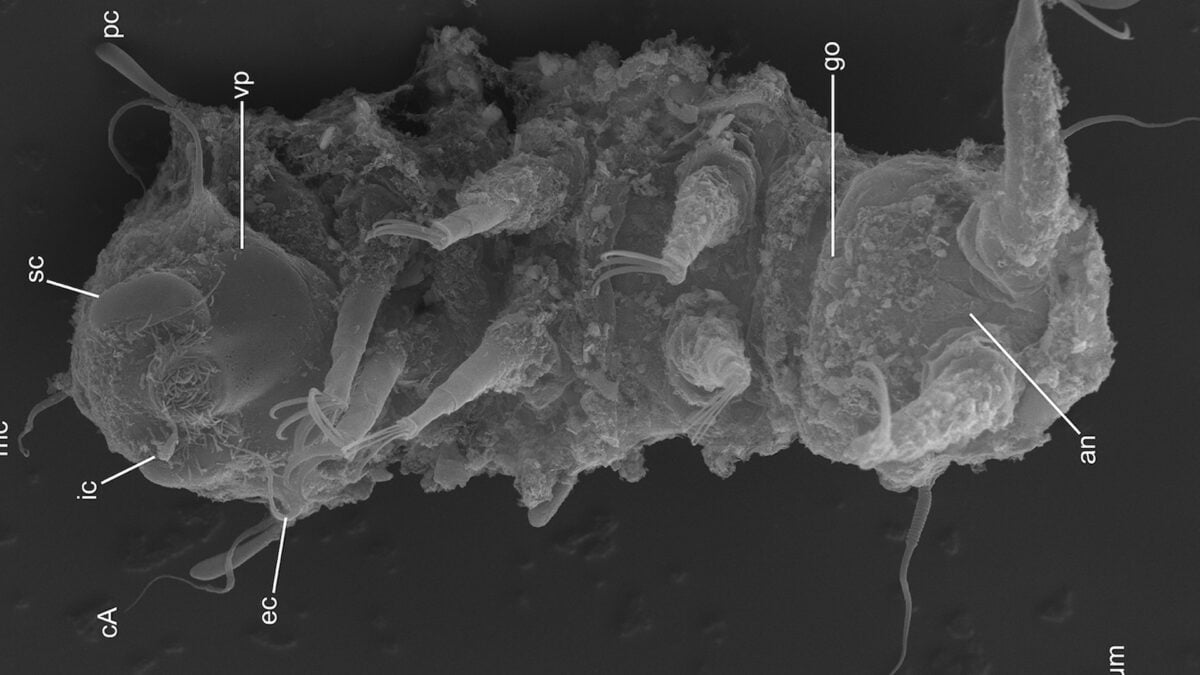
Researchers working with sediment collected during a 2009 expedition aboard the vessel Meteor have formally described two new species from Senghor Seamount, an underwater mountain in the eastern tropical Atlantic near Cape Verde. The samples sat in storage for years before receiving a detailed taxonomic examination, which revealed 20 distinct tardigrade groups among 219 individuals. Alongside three known species and 15 specimens that could not be identified to species level, the team confirmed Megastygarctides hekatae and Parastygarctus potercha as new to science. Five additional groups may also represent new species, but their condition was too poor for verification.
Megastygarctides hekatae
Found at roughly 100 meters below the surface, this species measures about 193 micrometers in length. Its body features several armoured plates, and females possess a distinctive pair of short, hollow spines tipped with tiny hooks. These structures extend from ducts linked to seminal receptacles, making them a rare anatomical trait among tardigrades.
Parastygarctus potercha
At just 69 micrometers long, this species is even smaller. It displays fewer claws than many relatives and retains juvenile physical characteristics well into sexual maturity, a biological pattern known as pedomorphosis. Its body includes multiple plates and sharp, spine-like projections along its sides and rear.
Why This Matters
Marine tardigrades inhabit everything from coastal sands to deep-ocean sediments, yet they remain poorly documented compared with their land-dwelling cousins. Describing new species helps scientists understand how these microscopic creatures adapt to extreme environments and how biodiversity is distributed across deep-sea habitats. The unusual reproductive anatomy of Megastygarctides hekatae and the retained juvenile traits of Parastygarctus potercha also offer fresh material for studying evolution and development in microscopic invertebrates.
Key Takeaways
- Two new armoured tardigrade species were identified from Atlantic deep-sea sediments.
- The specimens originated from Senghor Seamount near Cape Verde and were collected in 2009.
- Megastygarctides hekatae has rare hollow genital spines with hooked tips.
- Parastygarctus potercha shows pedomorphosis, keeping juvenile features into adulthood.
- The study, published in ZooKeys, examined 219 individuals and documented 20 tardigrade taxa.
- Around 1,550 tardigrade species have been described so far, with more likely awaiting discovery.
Conclusion
The discovery underscores how much remains unknown about life in the deep ocean. Even well-studied groups like tardigrades continue to yield surprises when researchers examine under-sampled habitats. As exploration of seamounts and deep-sea sediments continues, scientists expect to find additional species that could reshape our understanding of microscopic marine life.
Discussion
Join the conversation
Thoughtful reactions, questions, and follow-up ideas help shape the next story.